Mount Longonot National Park

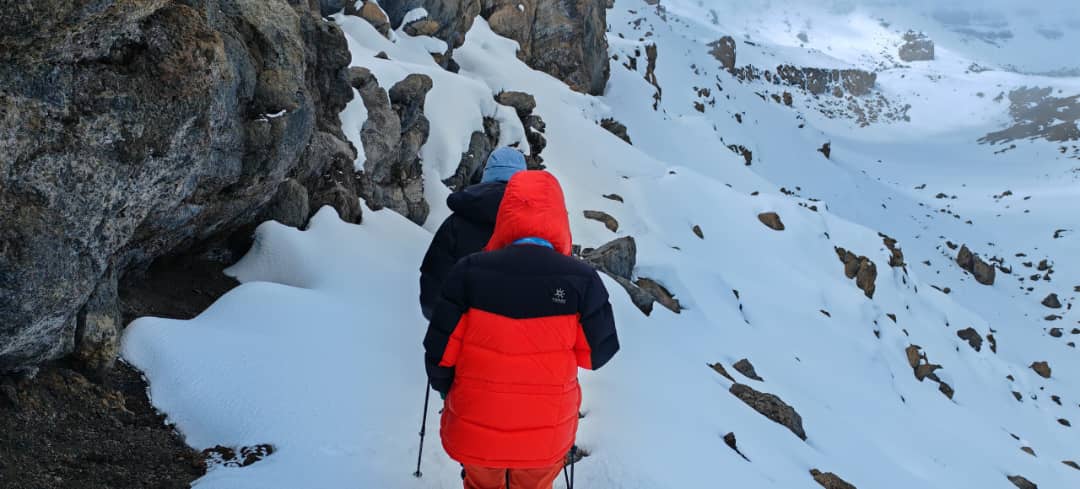
A dormant volcano two hours from Nairobi with a path right around its crater rim. The climb takes about four hours return and the view down into the forested crater floor, and out across Lake Naivasha, is the reward. It is the best half-day of exercise in the Rift Valley.

  • The full crater rim circuit, roughly seven hours
  • Views over Lake Naivasha and the Rift Valley floor
  • Forest growing inside the crater
  • Steam vents on the lower slopes
  • Close enough to Nairobi for a day trip
  • Best time to comeAll year. Start before 8am: there is no shade on the rim and it gets fierce by midday.
  • Good forHikers, day trips from Nairobi, active itineraries
  • Where it is90km from Nairobi in the Rift Valley Province.
Mount Longonot National Park, Kenya

What you do in Mount Longonot National Park

Every one of these is something we run here, not a stock list.

Going to Mount Longonot National Park

We do not have a scheduled itinerary for Mount Longonot National Park on the site right now, which does not mean we cannot take you. We build private trips to order across Kenya — tell us your dates and we will put a route and a price together.

Plan a trip to Mount Longonot National Park

More about Mount Longonot National Park

The name Longonot is derived from the Maasai word Oloonong’ot meaning mountains of many spurs or steep ridges. The volcano is dormant and is thought to have last erupted in the 1860s. The park was first opened to the public and visitors in January 1983.

Longonot National Park comprises mainly of a savannah ecosystem with the dominating young volcano – Mt Lononot – that rises to 2,776 metres above sea level. The sides of the mountain are beautiful V-shaped valleys and ridges with little vegetation, but with dense forest occurring within the crater. A trail runs from the park entrance up to the crater rim, and continues in a loop encircling the crater a hiking round tour that takes about 5 hours. On the crater floor is forest vegetation dotted with steam vents around the wall of the crater.

Animals: Buffalos, gazelles, impala and giraffe. Within the thick forest in the crater major wildlife attractions include lion, leopard, bushbucks, common zebra, giraffe, grant gazelles, Thomson gazelles and many other antelopes.

https://maps.app.goo.gl/hk2faF5f2MitDNE66

Also in Kenya

Most safaris here combine two or three of these.

Maasai Mara

Maasai Mara

The Mara is the northern end of the Serengeti ecosystem, and the single best place in Africa to watch big cats hunt. Between July and October around a million and a half wildebeest and zebra cross the Mara River into it. The rest of the year it is quieter, cheaper, and still holds the highest density of lion, cheetah and leopard in Kenya.

Amboseli

Amboseli

Amboseli is where you photograph elephants with Kilimanjaro behind them. The swamps fed by meltwater off the mountain hold big herds year round, the plains are open and dusty so nothing hides, and it is close enough to Nairobi to be worth three days on its own.

Samburu National Reserve

Samburu National Reserve

Samburu is the dry north, and the wildlife is different for it. Grevy's zebra, reticulated giraffe, Beisa oryx, gerenuk and Somali ostrich live here and almost nowhere else in Kenya — guides call them the Samburu Special Five. The Ewaso Nyiro river keeps it all alive and draws elephant down to drink all afternoon.

Lake Naivasha

Lake Naivasha

Naivasha is the freshwater lake in the floor of the Rift Valley, ninety minutes from Nairobi. You get out of the vehicle here: a boat among the hippos, a walk or a cycle on Crescent Island among giraffe and zebra with no predators to worry about. It is the day that breaks up a driving safari.

Thinking about Mount Longonot National Park?

Tell us roughly when you can travel and how long you have. We will tell you honestly whether Mount Longonot National Park is the right call for those dates — and what it costs.