Mount Kenya National Park

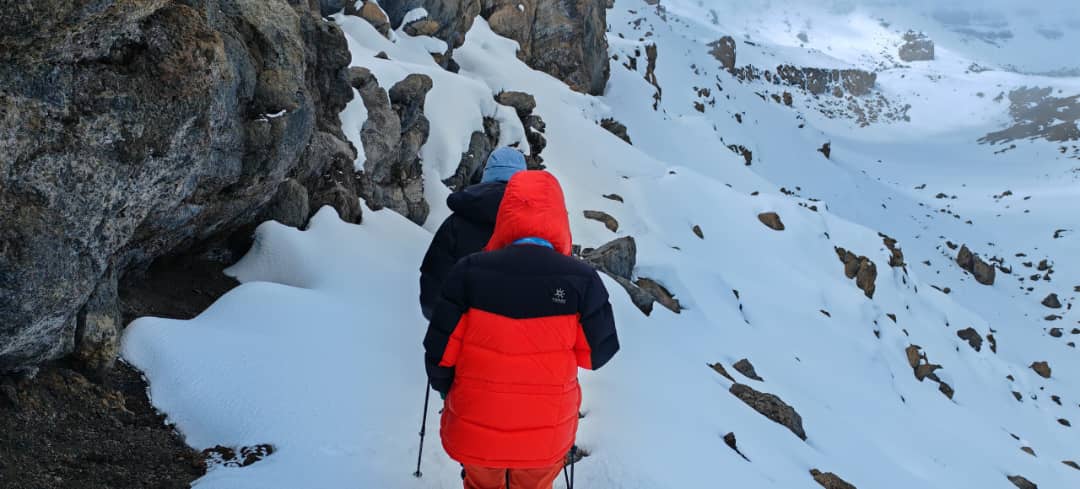
Africa's second highest mountain, and the one you can climb without technical gear. Point Lenana at 4,985m is a long trek rather than a climb, through bamboo, giant groundsel and glacial tarns. The forest on the lower slopes holds elephant and buffalo, so the first day is a game walk in all but name.

  • Point Lenana at 4,985m, reached on foot in four to five days
  • Giant lobelia and groundsel found only on East Africa's high peaks
  • Glacial tarns and the Teleki valley
  • Elephant and buffalo in the lower forest
  • Fewer climbers than Kilimanjaro, and better acclimatisation
  • Best time to comeJanuary to February and July to October are the dry climbing windows. The mountain makes its own weather in any month.
  • Good forTrekkers, acclimatising before Kilimanjaro, mountain birders
  • Where it is150 -175 km North of from Nairobi depending on the route taken. It lies in the Central and Eastern Provinces of Kenya.
Mount Kenya National Park, Kenya

What you do in Mount Kenya National Park

Every one of these is something we run here, not a stock list.

Going to Mount Kenya National Park

We do not have a scheduled itinerary for Mount Kenya National Park on the site right now, which does not mean we cannot take you. We build private trips to order across Kenya — tell us your dates and we will put a route and a price together.

Plan a trip to Mount Kenya National Park

More about Mount Kenya National Park

Established as a park in 1949 to preserve the area's natural, outstanding beauty. As well as to conserve the animal habitat and protect it as a water catchment area and encourage tourism. Initially, it was a forest reserve before being announced as a national park. Currently, the national park is within the forest reserve which encircles it. In April 1978 the area was designated a UNESCO Biosphere Reserve. The national park and the forest reserve, combined, became a UNESCO World Heritage Site in 1997.

Size: Mount Kenya National Park covers 715km² and the forest reserve at the base covers a further 705km².

Mount Kenya stands a magnificent 5199m (17,057 feet) above sea level, dominating the view for miles around with an eroded crater rim that has formed several peaks surrounded by pristine wilderness, glaciers and mountain lakes. The lower slopes of the park are spectacularly domed with rainforest and dense thickets of bamboo, while higher up the flora changes dramatically: moorland and giant lobelia and heather.

The vegetation can be divided into 3 primary zones as you ascend: the rocky peak area, which is actually an eroded volcanic plug with its mantle of glaciers and snowfields; the alpine zone with its distinctive giant vegetation; and the vast gentle lower slopes drenched in mountain forest and bamboo.

Animals: The majority of animals live lower down on the slopes of Mount Kenya where there is more vegetation and the climate is less extreme. The forests are home to elephant, buffalo, monkeys, antelope and giant forest hog, tree hyrax, white tailed mongoose, mole rat, bushbucks, water buck, monkeys, porcupines and eland. The hyena, leopard and lion are also rare sights. The mountain hyrax and common duiker can be found at higher altitudes.

Of interest: Mountain climbing, wildlife viewing, camping, cave exploration.

https://maps.app.goo.gl/ueYySRd65nTziP8TA

Also in Kenya

Most safaris here combine two or three of these.

Maasai Mara

Maasai Mara

The Mara is the northern end of the Serengeti ecosystem, and the single best place in Africa to watch big cats hunt. Between July and October around a million and a half wildebeest and zebra cross the Mara River into it. The rest of the year it is quieter, cheaper, and still holds the highest density of lion, cheetah and leopard in Kenya.

Amboseli

Amboseli

Amboseli is where you photograph elephants with Kilimanjaro behind them. The swamps fed by meltwater off the mountain hold big herds year round, the plains are open and dusty so nothing hides, and it is close enough to Nairobi to be worth three days on its own.

Samburu National Reserve

Samburu National Reserve

Samburu is the dry north, and the wildlife is different for it. Grevy's zebra, reticulated giraffe, Beisa oryx, gerenuk and Somali ostrich live here and almost nowhere else in Kenya — guides call them the Samburu Special Five. The Ewaso Nyiro river keeps it all alive and draws elephant down to drink all afternoon.

Lake Naivasha

Lake Naivasha

Naivasha is the freshwater lake in the floor of the Rift Valley, ninety minutes from Nairobi. You get out of the vehicle here: a boat among the hippos, a walk or a cycle on Crescent Island among giraffe and zebra with no predators to worry about. It is the day that breaks up a driving safari.

Thinking about Mount Kenya National Park?

Tell us roughly when you can travel and how long you have. We will tell you honestly whether Mount Kenya National Park is the right call for those dates — and what it costs.